
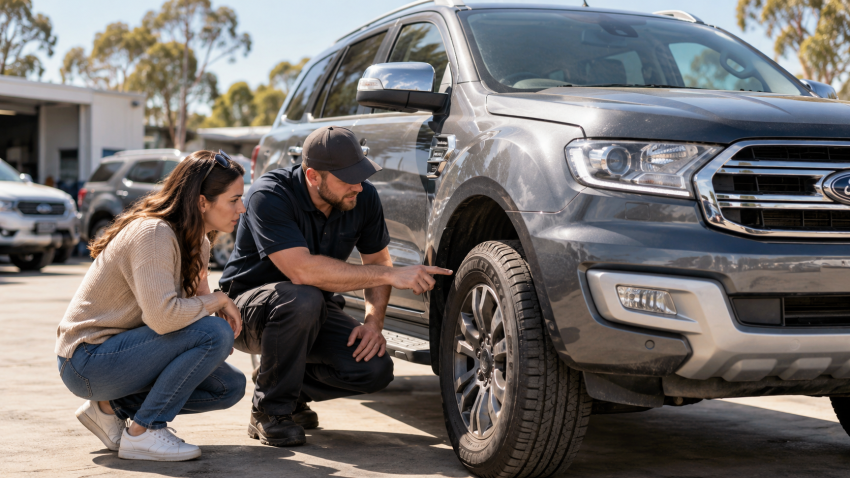
Used Ford Everest Inspections: What You Can Check and When to Call a Mechanic
A used Everest rewards a calm inspection more than a quick glance. You can learn a lot in a car park without tools, and get a clearer sense of when a mechanic needs to take over.
Get the history straight before you touch the car
Ask for the logbook and owner’s manual before you walk around the car. With used Ford cars, the paperwork often tells the real story, so give it ten minutes. Match stamps and receipts to the odometer and look for gaps in time or kilometres. If servicing for the automatic transmission or transfer case is not recorded, write that down as a question for a professional.
Check the vehicle’s VIN and build information, and confirm its exact drivetrain using the vehicle records or specifications.Don’t assume all Everests in a yard are the same, because trim and drive systems have changed over time. The manual will also spell out how the maker intended the drive selectors to be used.
Don’t buy a story without paperwork to back it up.
Walk around it without tools or crawling
Start with a slow lap in daylight and stay on your feet. Look at panel gaps and paint tone from front to rear, then bend at the knees to look along the sills for dents. Tyres should match in brand and size on each axle, with wear that looks even from side to side.
Stand back and look at how the car sits. It should be level left to right, with no sag at the rear when empty. Look on the ground under the engine bay and rear axle for fresh drips, and lift the bonnet for a look from above without touching hot parts or opening caps.
Have a look at the tow bar and trailer plug for scuffs and dirt that suggest regular towing. A car that has towed needn’t be ruled out, though a mechanic should give its brakes and rear suspension closer attention on a hoist. Keep your own check visual and leave the underbody for the workshop.
Check the cabin while parked
Sit in the car with it parked and the handbrake on. Follow the starting procedure in the owner’s manual. Observe the normal warning-light check at ignition and note any lights that remain on after starting; ask the seller or mechanic about anything unfamiliar. Try the windows and door locks, and run the air-con through hot and cold while you check the fan speeds.
Check the seats and steering wheel for wear that does not line up with the kilometres shown. Test the infotainment screen for a clear display and steady response, and check that the owner’s manual is in the glovebox. If the cars on your shortlist start to blur together, use a search such as ford everest for sale perth to compare individual listings, then ask for the records supporting each seller’s service-history description.
Look at the drive selectors but don’t twist through settings you don’t understand. The manual sets out what each position is for, and some settings are only meant for loose surfaces with the steps done in order. If anything is unclear, leave it for a qualified mechanic to explain on a hoist and road test with the right gear.
Keep the drive normal and agreed
Agree a route with the seller that covers normal use. It should take in a highway stretch and some stop-start streets if that is possible where you meet. Allow enough time to feel the steering and brakes when warm, rather than settling for a short local loop that could hide faults.
Keep your eyes on the road and your ears open. Note any shudder through the wheel or pull to one side under braking, and whether the gearbox feels slow to respond in traffic. There’s no need to push the car hard, and you should not take it off road or try rough tracks on a first long drive.
Perth buyers often face long highway runs and weekend towing. A car that cruised freeways will present differently to one that did short city hops. Dust in door shuts and stone chips up front can hint at gravel use. None of that rules a car out. It does help you decide where to ask a mechanic to look more closely.
If a warning light stays on, pull over where it is safe and stop the drive. A calm stop now beats an argument later about who caused a fault.
Hand over to a mechanic at the right point
Call a mechanic when you see active drips or warning lights that won’t clear. Gaps in the logbook or a seller who can’t explain the exact drivetrain service record are also reasons to call one. Paying for an inspection you didn’t need is better than buying a problem you didn’t see.
Ask what a pre-purchase inspection covers before you book. Confirm whether hoist access, a road test and a diagnostic scan are included. Mobile and workshop inspections differ, and the scope varies between providers. Ask for the list in writing so you understand the scope of the inspection and its limits.
Use your own checks to weed out the tired cars. Then let a mechanic assess the one that is left before you commit to buying it. That split keeps you in control without asking you to guess at jobs that need a hoist.